

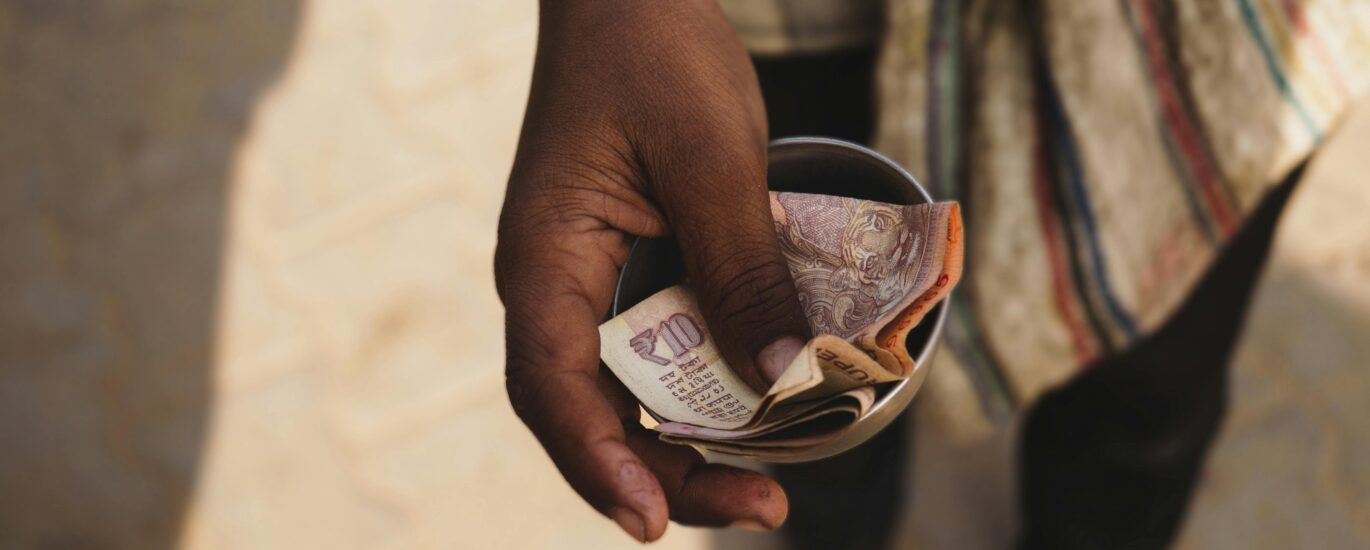
One of the major pillars of Islam is the Zakah. To the Quranic word Zakah and the meaning it conveys, there is no equivalent in any other language as far as we know. Zakah is not merely a deduction of a certain percentage from one’s property, but an abundant enrichment and spiritual investment.
The Quranic word Zakah not only includes charity, alms, tithe, kindness, official tax, valuntary contributions, etc., but it also combines with all these God-mindedness and spiritual as well as moral motives.
The literal and simple meaning of Zakah is purity. The technical meaning of the word designates the annual amount in kind or coin which a Muslim with means must distribute among the rightful beneficiaries.
The Zakat is neither charity nor alms. Nor is it the “poor due”. These are formless acts of altruism, devoid of specification or modality other than that of being given freely. Unlike them, Zakat is a yearly levy at a specific rate of the nisab 2½% of the total wealth appropriated to date, above a certain minimum) for distribution among categories specified in the Holy Quran. This is why it should be called by it Quranic name whatever the language of discources, like shahadah, salat and the whole set of Quranic religious vocabulary. Zakat functions as a “sweetening”, a making innocent, legitimate and good for consumption of the wealth earned by any lawful activity or means. It is indeed a sharing of one’s wealth with the unfortunate who have no wealth. To man, Allah Almighty made the whole universe an inheritance to master and to possess, to sufruct and to enjoy. He called the universe His bounty granted to man and He enjoined them to seek and enjoy every material and aesthetic value in it. Sharing it with the destitute, however, Allah’s Almighty declared tantamount to the whole of religion, not merely to the observance of the command of Zakat. He instituted the Zakat as a means of forcing wealth to circulate, prevevt economic scelerosis. And He equated spending of one’s substance with spending one’s life; both being forms of the supreme sacrifice called jihad.
How does observance of Zakat as “ibadha” affect the development of personality?
First, it is an act of obedience to Allah, requiring man to give up for Allah’s sake that which he cherishes and values most, the fruit of his labour. Therefore it relates man to Allah, His Creator, or Master, and establishes between them a bond of loyalty, of love and esteem.
Zakat makes the observant a “party” to divine providence, a solodier-servant of Allah bearing His brand and raising his banner, Second, Zakat establishes a bond of mutual affection and concern, indeed of genuine brotherhood, between man and man. Thus, it contributes the cohesive cement out of which society is made, marshalling the economic, cultural, moral and religious factors and combining them together in the service of the Ummah (i.e. of societal being). There can be no firmer foundation for society, for social justice for social welfare and solidarity. A group of humans sharing together their physical, psychic, linguistic characteristics is cemeinschaft (community). One that share together their history and culture and a will to a common future is a gesellschaft (society). But the society which observes the ibadah of Islam is an ummah, a new being, a modality of existence higher than all the rest. The personality which is a full member of the ummah in these senses is an ummatic personality.
